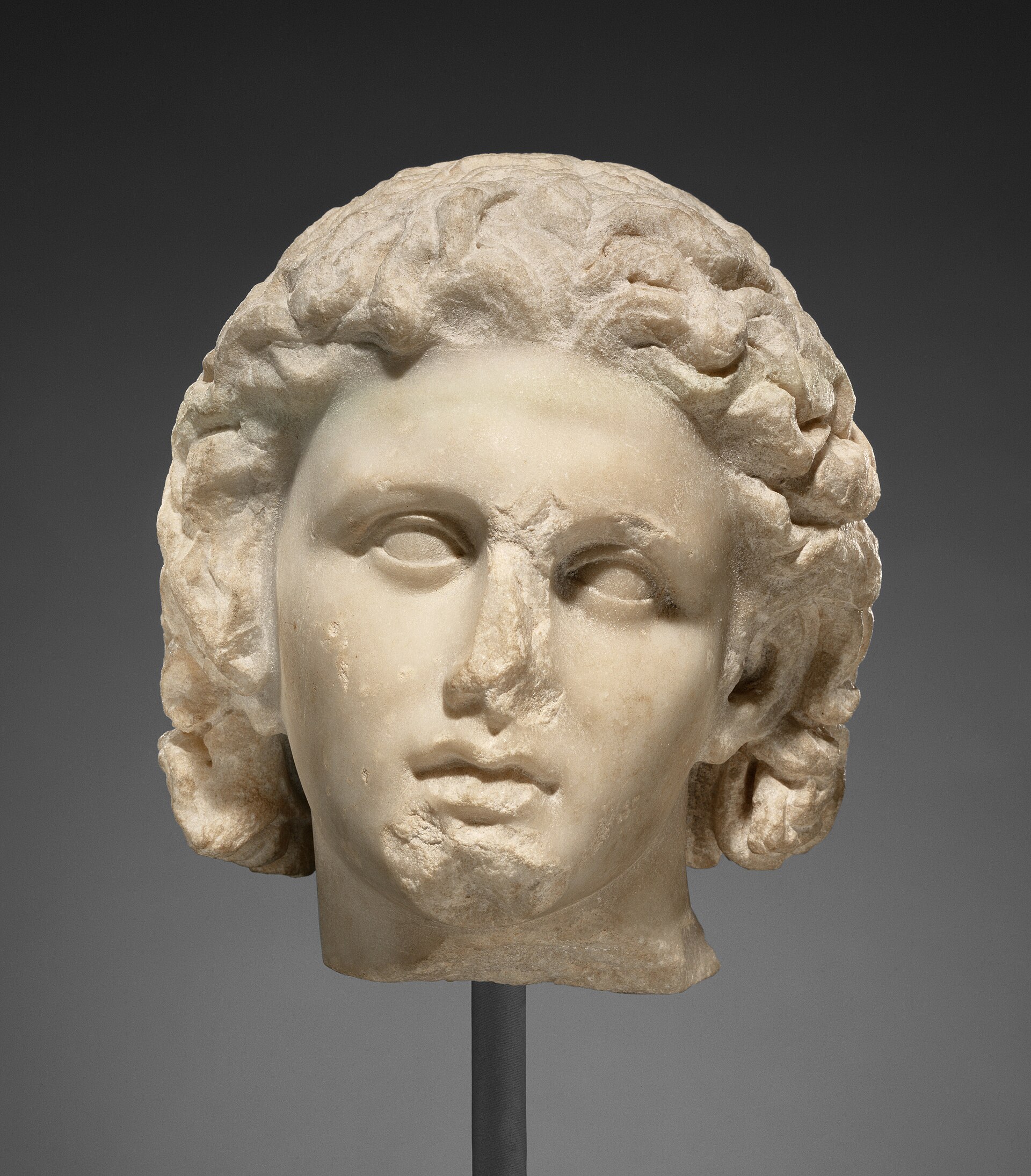
Alexander the Great was a Macedonian king who belonged to the Greek cultural world. He spoke Greek, worshipped Greek gods, traced his dynasty to Greek heroic ancestors, competed in Greek political and religious traditions, and spread Greek language and institutions across his conquests.
However, “Greek or Macedonian?” is not a clean modern either-or question. Ancient Macedonians had their own kingdom and political identity, while their relationship with the city-states to the south was sometimes contested. The most precise answer is that Alexander was Macedonian and culturally Greek.
Was Alexander Macedonian?
Yes. Alexander was born in 356 BCE at Pella, the capital of the kingdom of Macedon. His father was King Philip II, and Alexander inherited the Macedonian throne in 336 BCE. His army, court, and authority were rooted in the Macedonian monarchy.
Ancient Macedon was not simply another polis like Athens or Sparta. It was a territorial kingdom with its own elite traditions and regional identities. Calling Alexander Macedonian is therefore essential, not a denial of his Greek cultural affiliations.
Why is Alexander also described as Greek?
The Macedonian royal court used Greek. Alexander was educated by Aristotle and immersed in Homer; ancient accounts repeatedly connect him with Achilles. He sacrificed to Greek gods and presented his war against Persia partly through the memory of earlier Greek-Persian conflict.
The Argead dynasty claimed descent from Heracles and from Argos in the Peloponnese. Herodotus records a story in which an earlier Alexander of Macedon was permitted to compete at Olympia after establishing his Argive descent. The story shows both recognition and debate: the claim mattered because eligibility was restricted to Greeks.
Did ancient Greeks consider Macedonians Greek?
Ancient answers were not uniform. Some writers connected the royal house and Macedonians more broadly with the Greek world. Athenian opponents, especially during Philip II’s expansion, could describe Macedonians as outsiders or “barbarians.” Such language was often political abuse as well as an ethnic judgement.
Greek identity itself was layered. Shared language, sanctuaries, myths, and customs existed alongside fierce local identities. Athenians, Spartans, Thessalians, Epirotes, and Macedonians did not need to abandon regional identity to participate in a wider Hellenic culture.
What language did Alexander speak?
Greek was the language of Alexander’s court, education, administration, and surviving public communication. Scholars debate the precise character of ancient Macedonian speech and whether it was a Greek dialect or a closely related language, but Alexander’s own documented cultural and political language was Greek.
After his conquests, varieties of Greek became the common language of administration and exchange across much of the eastern Mediterranean and Near East. The resulting Hellenistic world did not erase local cultures, but it greatly expanded the reach of Greek language and institutions.
Does modern nationality answer the question?
No modern nation-state existed in Alexander’s time. Applying present-day passports to the fourth century BCE creates false precision. Modern disputes over names, borders, and heritage can also encourage selective quotation from ancient sources.
A historically useful answer distinguishes political identity from cultural affiliation. Alexander was not “Greek instead of Macedonian” or “Macedonian instead of Greek” in the way modern national categories imply.
How did Alexander present himself?
Alexander’s self-presentation changed across his empire. In Greece he led the League of Corinth against Persia. In Egypt he became pharaoh and was associated with Zeus-Ammon. In Asia he adopted selected elements of Persian court practice. These roles show imperial flexibility rather than a single exclusive identity.
Visual evidence likewise blends traditions. Our article on what Alexander the Great looked like explains how royal portraits created a recognizable heroic image. His exact height, by contrast, remains unknown.
Final answer: was Alexander the Great Greek?
Alexander was the king of Macedon and a member of its Argead dynasty. He was also Greek-speaking, Greek-educated, devoted to Greek gods and heroes, and a central agent in the spread of Hellenic culture.
“Macedonian and culturally Greek” is more accurate than forcing him into one side of a modern national binary.
Sources and further reading
- Herodotus, Histories 5.22, on the Argead claim and the Olympic Games.
- Arrian, Anabasis of Alexander.
- Ancient Macedonians in Greek and Roman Sources.
- J. Paul Getty Museum portrait of Alexander the Great (CC0).
Frequently asked questions
Was Alexander the Great Greek?
Alexander was a Macedonian king who spoke Greek, received a Greek education, worshipped Greek gods, and belonged to the wider Greek cultural world.
Was Alexander the Great Macedonian?
Yes. He was born at Pella and inherited the throne of the kingdom of Macedon.
What language did Alexander speak?
Greek was the documented language of his court, education, administration, and public communication.
Did ancient Greeks consider Macedonians Greek?
Ancient opinions varied and were affected by politics, but the Macedonian royal house claimed Greek descent and participated in Greek traditions.