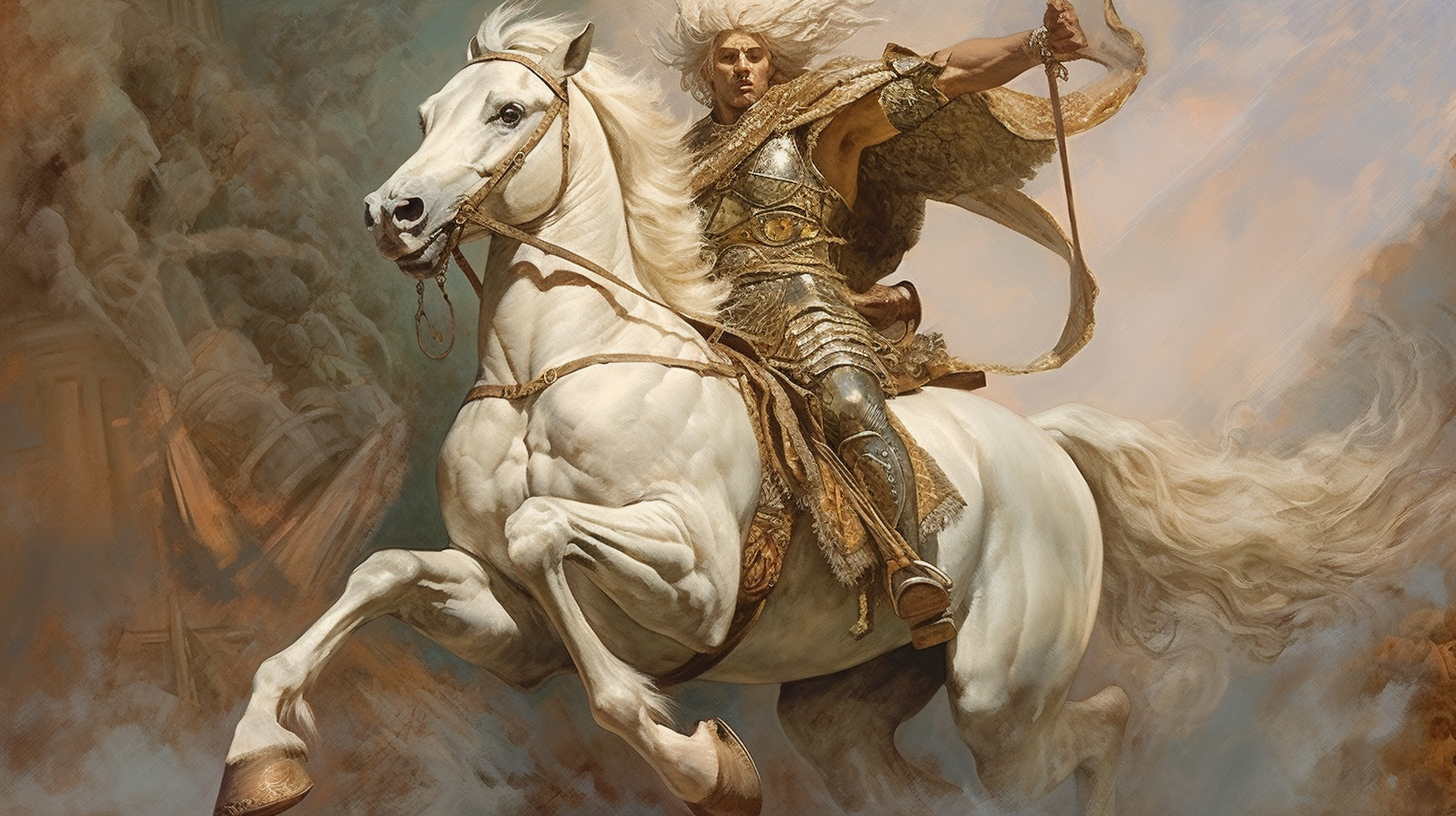
Alexander the Great was probably not exceptionally tall. The most reasonable estimate is that he stood somewhere around 165–170 cm, or about 5’5”–5’7”, although we do not have a reliable ancient measurement of his height.
That may sound short today, but it would not have been especially unusual in the ancient world. For a Macedonian king and military commander in the fourth century BC, Alexander’s height was probably less important than his build, presence, image, and ability to command loyalty.
The problem is that Alexander’s height was never recorded in the way modern readers would like. Ancient writers cared far more about his character, courage, divine image, military genius, and physical presence than about exact numbers. So when people ask how tall Alexander the Great was, the honest answer is: we can estimate, but we cannot know for certain.
Is There a Reliable Measurement of Alexander the Great’s Height?
No reliable ancient source gives us Alexander’s exact height.
That is the most important thing to understand. There is no surviving medical record, skeleton, official description, or contemporary measurement that tells us precisely how tall Alexander was. Most modern estimates are based on indirect evidence: ancient descriptions of his appearance, artistic representations, and what we know about average male height in the ancient Mediterranean world.
This means any exact number should be treated carefully. If someone claims Alexander was definitely 5’4”, 5’7”, or over six feet tall, they are probably being more confident than the evidence allows.
A cautious answer is better: Alexander was likely of average or slightly above-average height for his time, but not a giant.
What Did Ancient Sources Say About Alexander’s Appearance?
Ancient writers did describe Alexander’s appearance, but they were not writing modern biographies. They were often interested in symbolism.
Plutarch, one of the most important ancient sources on Alexander, says that his outward appearance was best captured by the statues made by Lysippus, the sculptor Alexander supposedly preferred. Plutarch mentions details such as the slight tilt of Alexander’s neck, his distinctive gaze, and his complexion.
That tells us something useful: Alexander had a recognizable physical image. His portraits were part of his power.
But it does not give us a height.
This is where the confusion begins. Later readers often try to turn ancient descriptions of presence, strength, or heroic appearance into claims about physical size. But ancient “greatness” did not always mean literal tallness.
Was Alexander the Great Short?
Alexander may have been shorter than some people imagine, but calling him “short” is probably misleading.
Modern ideas about height are shaped by modern nutrition, medicine, and averages. A man of 165–170 cm might be considered below average in some countries today, but in the ancient world that range would not have seemed extraordinary.
There is also a difference between being short and being remembered as small. Alexander was a king, a cavalry commander, and a conqueror who led from the front. His authority came from charisma, violence, success, royal status, and battlefield reputation. His legend did not depend on him towering over everyone physically.
If anything, the uncertainty around his height makes him more interesting. The man who built one of the largest empires of the ancient world may not have looked like the giant people sometimes imagine.
Why Do People Think Alexander Was Tall?
There are a few reasons.
First, powerful historical figures are often imagined as physically imposing. We tend to connect greatness with size, even when the evidence does not support it.
Second, Alexander’s image was carefully shaped during and after his lifetime. He was represented in sculpture, coins, stories, and later histories as a heroic figure. Ancient rulers understood the power of appearance. A king’s body could become part of his political myth.
Third, many people confuse reputation with physical reality. Alexander conquered the Persian Empire, marched across Asia, founded cities, and became a symbol of ambition for later rulers. It feels natural to imagine him as tall, even if the evidence points to something more ordinary.
Did Alexander Have Marfan Syndrome?
Some modern theories suggest that Alexander may have had Marfan syndrome, a genetic condition that can be associated with tall stature, long limbs, and other physical traits.
But this theory is speculative.
There is not enough evidence to diagnose Alexander with a medical condition more than two thousand years after his death. Ancient descriptions of his body are too limited, too symbolic, and too inconsistent to support a serious diagnosis.
It is better to treat this as an interesting modern theory, not as established history.
Did Height Matter in Ancient Warfare?
Height could matter in ancient warfare, but not in the simple way people often assume.
A taller warrior might have greater reach or appear more intimidating. But ancient combat also depended on training, discipline, endurance, equipment, formation, horsemanship, and the ability to stay balanced under pressure.
Alexander’s success was not based on his height. It came from strategy, speed, command, risk-taking, and the army he inherited and transformed. He fought with cavalry, used combined arms tactics, and repeatedly made decisions that shocked larger enemy forces.
His body mattered because kingship in the ancient world was physical. He had to appear brave. He had to be seen in battle. He had to survive wounds and hardship. But he did not need to be unusually tall to do that.
So, How Tall Was Alexander the Great?
The best answer is that Alexander the Great was probably around 165–170 cm tall, or roughly 5’5”–5’7”.
But that should be read as an estimate, not a fact.
We do not have a surviving measurement of Alexander’s height. Ancient sources describe parts of his appearance, but they do not give us the number modern readers want. What we can say is that he was probably not the towering giant of legend. He was likely a man of fairly ordinary height whose reputation became anything but ordinary.
In the end, Alexander’s height tells us less about his body than about the way history works. We remember conquerors as larger than life, even when they may not have been larger than the men standing next to them.
Related reading
– What did Alexander the Great Look Like?
Sources and further reading
British Museum: portrait head associated with Alexander the Great
Explore related articles
How Tall Were Famous Historical Figures? · What Did Alexander the Great Look Like?
Frequently asked questions
Do we know Alexander the Great’s exact height?
No reliable ancient measurement of Alexander’s height survives. Any figure in centimetres or feet is a modern estimate, not a documented measurement.
How tall was Alexander the Great estimated to be?
Some modern estimates place Alexander around 165–170 cm (about 5 ft 5 in–5 ft 7 in), but the evidence is too limited to treat that range as certain.
Did ancient writers say Alexander was tall?
Ancient accounts describe aspects of Alexander’s appearance and public image, but they do not give a reliable numerical height.
Discussion
3 comments
[…] makes the evidence stronger than the estimates available for Alexander the Great or Julius Caesar, whose exact heights remain […]
[…] the Great looked like explains how royal portraits created a recognizable heroic image. His exact height, by contrast, remains […]
[…] mattered far more than height. The same attraction to exact numbers affects claims about Alexander the Great’s height and Julius Caesar’s […]