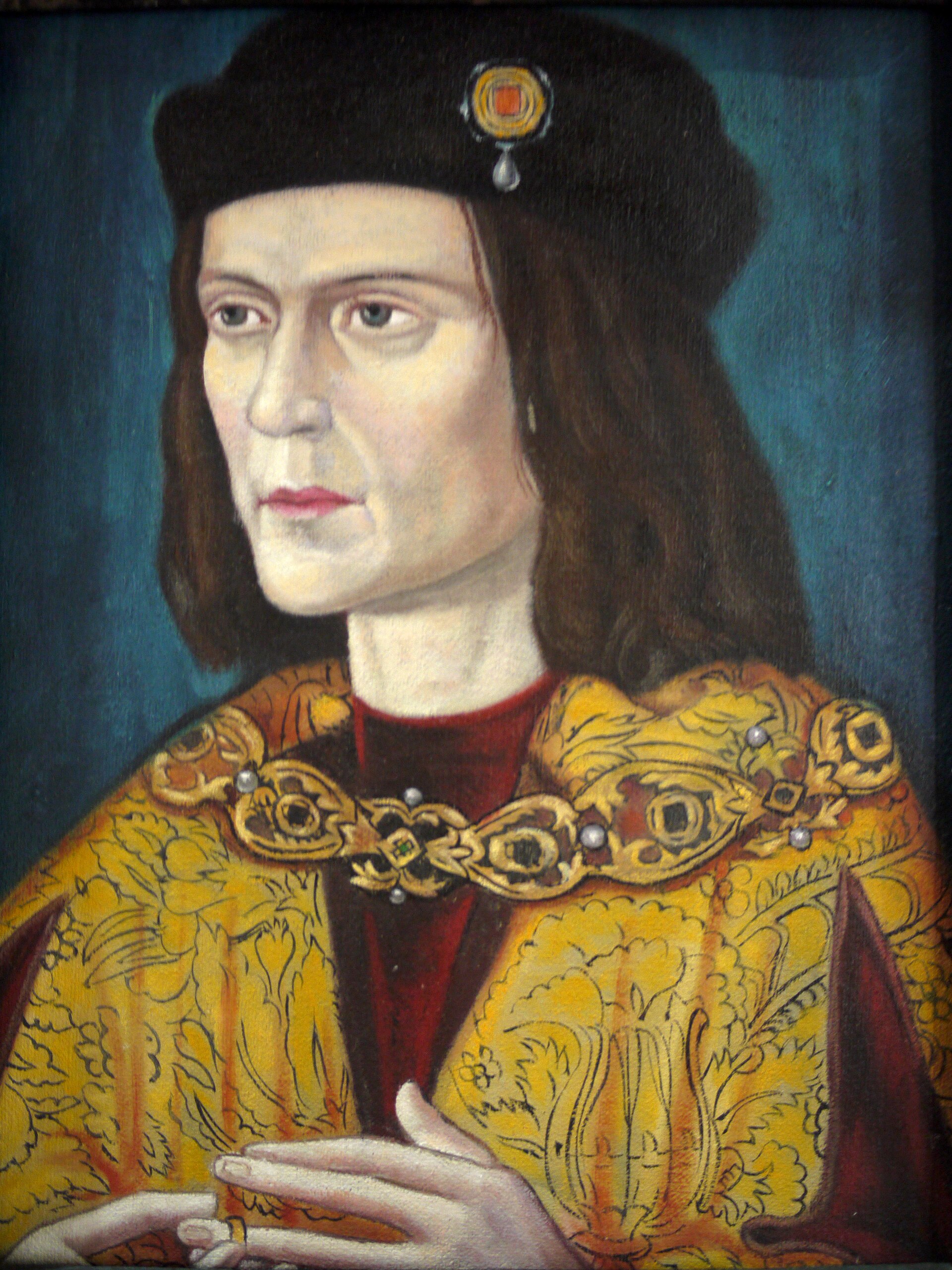
Richard III’s bones suggest a stature of about 1.74 metres, or roughly 5 feet 8½ inches, if his spine had been straight. His scoliosis would have reduced his standing height. The commonly quoted number therefore needs a qualification: it is not an exact measurement of how tall the living king stood.
This is a better-supported question than many historical height puzzles because identified skeletal remains can be examined. It is still an estimate, and Richard’s spinal condition makes the distinction between reconstructed stature and standing height especially important.
Where does the 1.74-metre figure come from?
The University of Leicester explains that Richard’s thigh bone supports an estimate of about 174 centimetres with a straight back. Its account explicitly notes that scoliosis would have reduced his apparent height. See what the bones can and cannot tell us.
The centimetre figure converts to approximately 5 feet 8½ inches in modern units. Some summaries round it to 5 feet 8 inches. That rounding should not be mistaken for disagreement about a precisely measured body: the starting point is itself a reconstruction.
How can a thigh bone indicate height?
A long bone does not equal a person’s height. Researchers use the relationship between bone lengths and living stature to estimate the missing total. The choice of method and the reference population affects the result, and a useful estimate includes uncertainty.
Professional guidance on stature estimation emphasizes the importance of suitable methods and reporting limitations. The number from a calculation should not be presented as if an archaeologist placed Richard against a measuring wall.
What difference did scoliosis make?
Richard’s skeleton has a pronounced spinal curve. The University of Leicester’s scoliosis findings link to the clinical research on the condition.
A curved spine changes the relationship between the lengths of the body’s parts and their combined vertical height. The estimated stature associated with a straight spine cannot simply be relabelled the height he presented while standing. Nor should a writer subtract an invented number of centimetres without a specific scientific basis.
The archaeological evidence describes a physical condition. It does not turn disability into a moral explanation of his character, and it should not be illustrated by exaggerated fictional anatomy.
How secure is the identification?
The remains were discovered at Grey Friars in Leicester in 2012. Identification was not based merely on finding a curved spine. Archaeology, the age and injuries of the individual, genetic work, and genealogical evidence contributed to the conclusion.
The project’s overview describes the investigation and the identification announced in 2013. Its DNA results provide further detail. That combination of evidence is why a measurement from these remains is relevant to Richard rather than just an anonymous medieval man.
Was he tall for a medieval king?
That question cannot be answered by placing 174 centimetres beside a universal “medieval average.” Comparison requires a defined population, period, and method—and in Richard’s case a decision about whether we mean estimated straight-spine stature or actual standing height.
Other rulers illustrate different evidential routes. Henry VIII’s height is discussed through armour, while Charlemagne’s stature involves a different combination of historical and physical evidence. They should not be treated as equally exact entries in a league table.
The answer to quote
Richard III’s skeleton indicates approximately 1.74 metres with a straight spine; scoliosis reduced his standing height. Keeping both parts of that statement preserves what the evidence actually tells us.
Frequently asked questions
How tall was Richard III?
The University of Leicester estimates about 1.74 metres if his spine had been straight. Scoliosis reduced his standing height, which cannot be stated exactly from that figure alone.
Is 1.74 metres Richard III’s exact standing height?
No. It is an estimate based on skeletal evidence for stature with a straight spine, not a direct measurement of his living posture.
Was Richard III’s skeleton identified securely?
The identification drew on multiple lines of evidence, including archaeology, skeletal analysis, genetics, and genealogy.