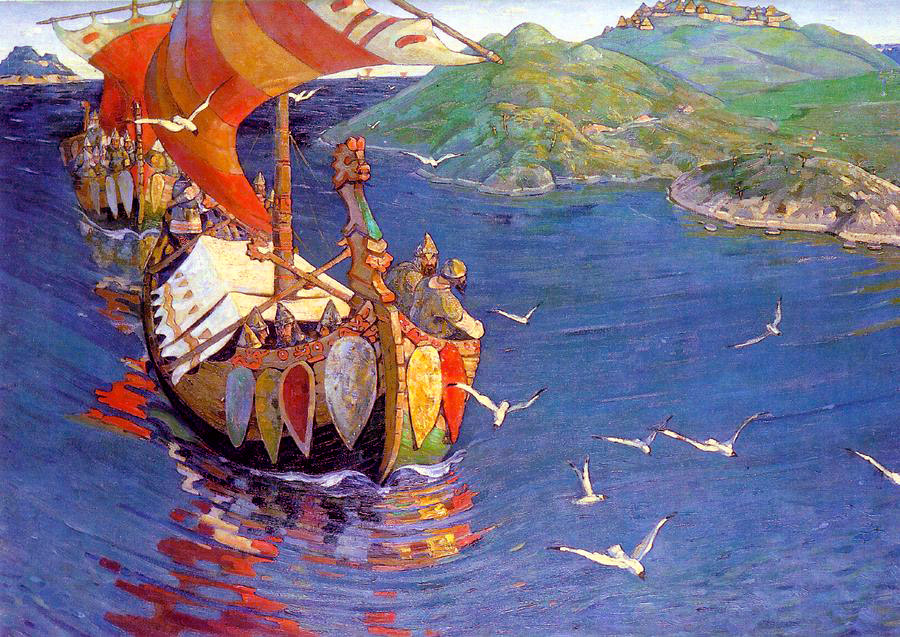
For a long time, Vikings have existed somewhere between history and fantasy.
Pop culture turned them into tall warriors wearing horned helmets, endlessly raiding villages across Europe. Movies, television, video games, and even sports teams helped cement a very specific image of what a Viking supposedly looked like.
But much of that image is historically incorrect.
Real Vikings were not simply brutal raiders from the north.
They were traders, explorers, settlers, craftsmen, and political opportunists who helped reshape medieval Europe.
Many of the things people think they know about Vikings today actually come from 19th-century romanticism, modern entertainment, and centuries of exaggeration.
Here are four Viking myths that history got completely wrong.
1. Vikings Wearing Horned Helmets
Okay, close your eyes and picture a Viking.
I bet you all imagined the same figure almost instantly: a massive warrior with braided hair, fur clothing, and a horned helmet.
Something like the guy in the picture below.

It is one of the most recognizable images in popular culture.
It is also almost completely fictional.
Archaeologists have never discovered a genuine Viking battle helmet with horns attached to it. Not a single confirmed example from the Viking Age has ever been found.
The famous image of horned Viking warriors mostly emerged centuries later through art, theater, and nationalism rather than history itself.
The “Viking look” most people recognize was essentially invented over 1,000 years after the Viking Age ended.
The myth became especially popular during the 19th century, when Europe developed a renewed fascination with medieval history and Norse mythology.
Romantic nationalism was spreading across the continent, and artists began turning Vikings into larger-than-life symbols of strength, heroism, and ancient identity.
One of the biggest influences came from opera.
In the 1870s, costume designers working on productions inspired by the German composer Richard Wagner began dressing Viking-inspired characters in elaborate horned helmets to make them appear more dramatic on stage.
The designs were visually striking, easy to recognize from a distance, and quickly became associated with Norse warriors in the public imagination.
From there, the image spread everywhere.
Real Viking helmets were built for survival, not spectacle.
They were practical pieces of military equipment designed to protect the head without limiting movement or visibility in combat. Horns would have added unnecessary weight and created obvious disadvantages during battle.
Only one nearly complete Viking helmet has ever been discovered: the Gjermundbu helmet, found in Norway in 1943. The helmet looks nothing like the fantasy versions seen in modern media.
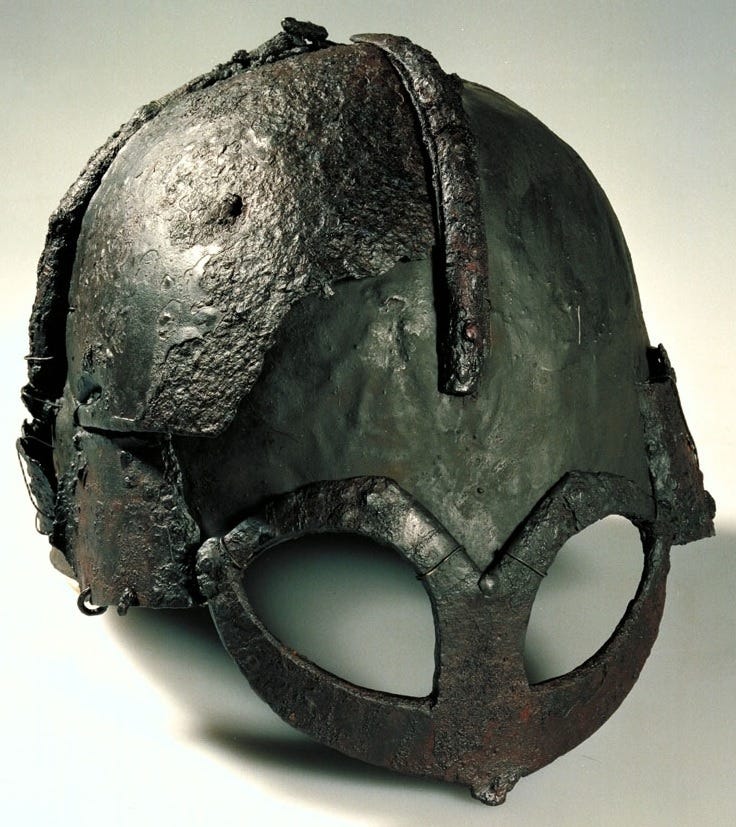
It is made of iron, rounded in shape, and designed with a face guard for protection. More than anything else, it resembles a functional early medieval combat helmet.
Horned helmets did exist in ancient Europe, but usually in ceremonial or religious contexts long before the Viking Age. Some Bronze Age artifacts feature horned headpieces, likely connected to ritual symbolism rather than warfare.
Over time, those older images became blended with later Norse mythology and modern artistic imagination.
2. Vikings Were Just Brutal Raiders
For a lot of people, Viking is a synonym for violence.
Things like burning cities and villages to the ground, raiding coastal towns, and raping women.
That image is not entirely wrong. Viking raids were real, and some were devastating.
The 793 attack on the monastery of Lindisfarne became one of the most infamous events of the early medieval period. Monasteries across Europe described the Norsemen as terrifying outsiders sent as punishment from God.
But those accounts only captured one side of Viking society.
The reality is that most Vikings were not full-time warriors endlessly raiding Europe. They were farmers, traders, shipbuilders, settlers, craftsmen, and explorers living within a surprisingly connected world.
The Viking Age was shaped as much by trade and migration as by warfare. Scandinavian merchants established routes that stretched across enormous distances, linking northern Europe to the Byzantine Empire and the Islamic world.
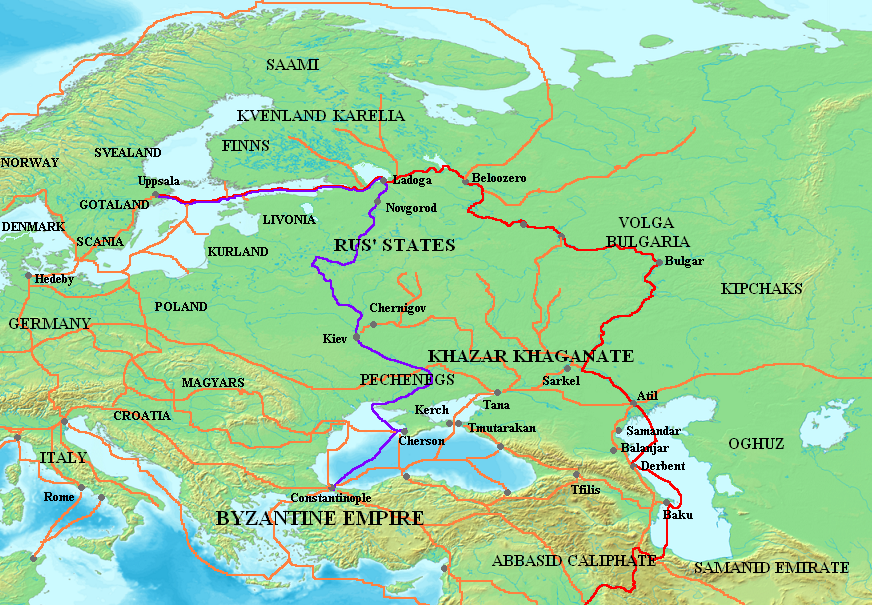
Archaeologists have discovered Arabic silver coins in Sweden, Byzantine jewelry in Scandinavia, and evidence of Norse trade networks extending deep into Eastern Europe and Central Asia.
Viking traders traveled through river systems in present-day Russia and Ukraine, eventually reaching cities like Constantinople and Baghdad.
Some historians even describe the Viking world as one of the earliest interconnected trade networks in medieval Europe.
And they were actually very skilled settlers.
The city of Dublin began as a Viking settlement. In northern France, Scandinavian settlers eventually became the Normans, whose descendants would later conquer England in 1066.
The Viking world stretched farther than many medieval kingdoms ever could.
The popular image of Vikings as nothing more than savage barbarians largely came from the people they attacked.
Christian monks and chroniclers recorded Viking raids with horror, often describing the Norsemen as violent pagans descending from the sea without warning. These accounts survived because monasteries produced many of the written records that historians still rely on today.
In many ways, the Viking reputation for violence overshadowed everything else they achieved.
3. Vikings Were Dirty and Primitive
Being a dirty and primitive barbarian fits the stereotype perfectly.
But the historical evidence tells a very different story.
In reality, Vikings appear to have cared a great deal about grooming, cleanliness, and personal appearance. Archaeologists have uncovered combs, tweezers, razors, ear cleaners, and specialized grooming kits in Viking settlements across Scandinavia and the British Isles.
These were not rare luxury items either — many appear to have been everyday objects.
According to The National Museum of Denmark, grooming was an important part of Norse culture and social presentation.
Some medieval writers even complained about it.
One English writer, writing about Scandinavian settlers in England, criticized them for bathing too frequently, combing their hair regularly, and dressing too well, claiming this made them unusually successful with local women.
The complaint sounds surprisingly modern, but it reveals something important: Vikings were not viewed as dirty by everyone around them.
In some cases, they may actually have appeared cleaner and more well-groomed than the people describing them.
Even the Scandinavian languages preserve traces of this culture of cleanliness.
The Old Norse word laugardagr, meaning “washing day,” eventually became the modern Scandinavian word for Saturday. Historians believe communal bathing and washing routines were a normal part of Viking life.
4. Vikings Were Unstoppable
Modern depictions of Vikings often make them seem almost superhuman.
In films, television, and video games, Viking warriors are usually portrayed as unstoppable fighters: fearless men charging into battle with unmatched strength and skill, overwhelming everyone in their path.
The real Vikings earned a reputation as dangerous warriors.
Their raids terrified coastal communities across Europe, their ships allowed them to strike with incredible speed, and their willingness to fight far from home gave them an aura of unpredictability that many medieval kingdoms struggled to counter.
But the idea that Vikings were unbeatable is largely a myth created by hindsight and legend.
In reality, Viking expeditions were risky, chaotic, and often unsuccessful.
Long travels across the North Atlantic could easily end in disaster.
Ships were lost in storms, settlements collapsed, alliances broke apart, and rival Viking leaders frequently fought each other for power.
Scandinavian societies during the Viking Age were politically fragmented, with regional kings and chieftains constantly competing for influence.
Many Viking raids also failed.
The famous successes survived in historical memory because they were shocking and dramatic, but defeats were common.
Medieval Europe was not defenseless forever.
Over time, kingdoms adapted by strengthening coastal defenses, building fortified towns, and organizing larger armies capable of responding more quickly to Viking attacks.
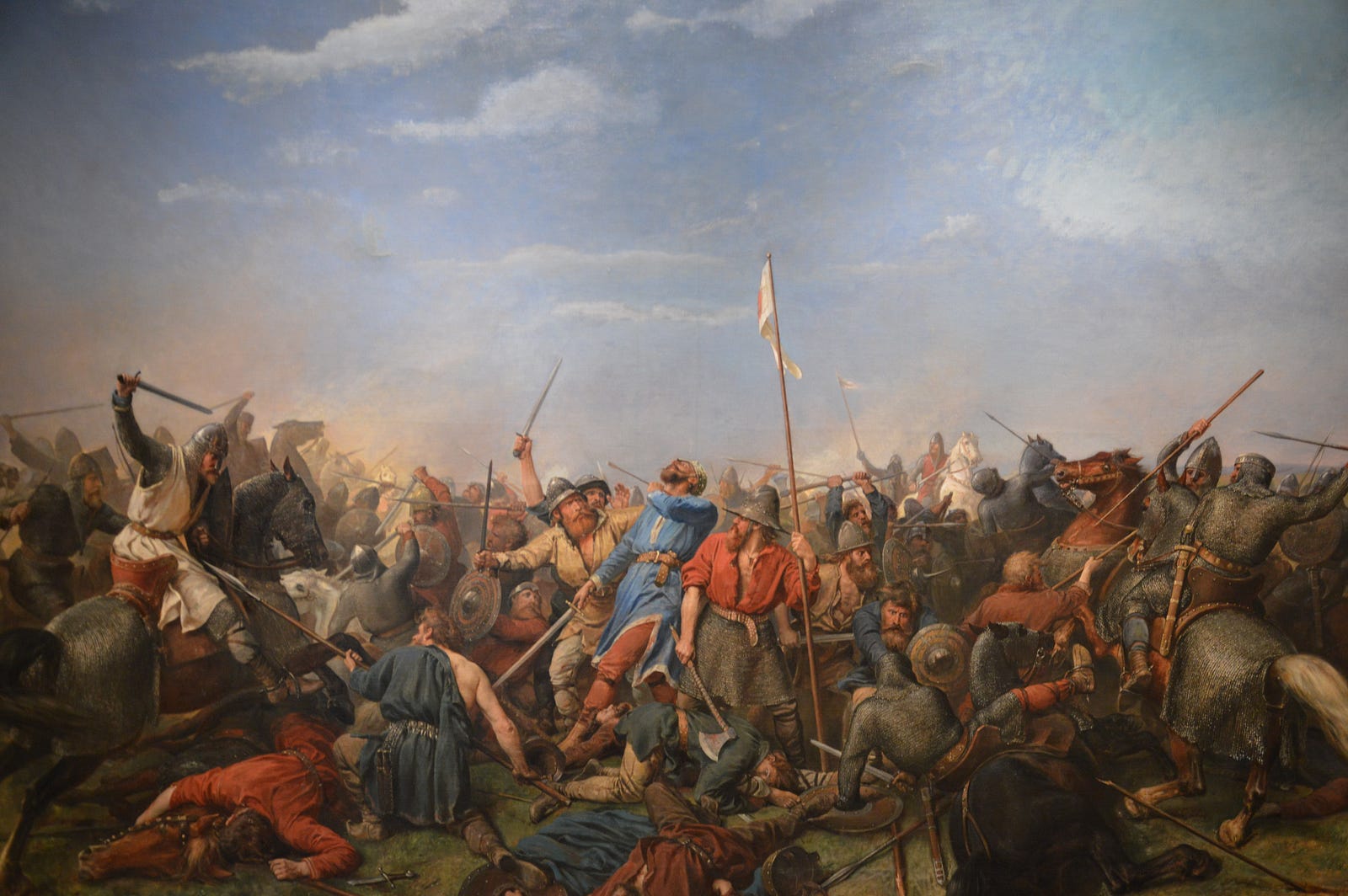
One of the most important defeats came in 1066 at the Battle of Stamford Bridge.
There, the Norwegian king Harald Hardrada invaded England with a large Viking force, hoping to claim the English throne. Initially successful, Hardrada’s army was eventually surprised and defeated by the forces of the English king Harold Godwinson.
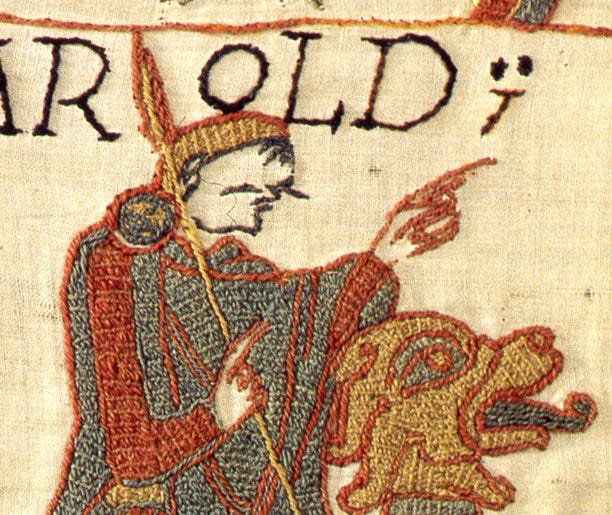
Hardrada himself was killed in battle. Historians often describe Stamford Bridge as the symbolic end of the Viking Age.
The Viking Age did not end because the Vikings disappeared.
It ended because the societies that produced them transformed.
The legendary raiders slowly became kings, merchants, landowners, and Christians, woven into the very kingdoms they once attacked.