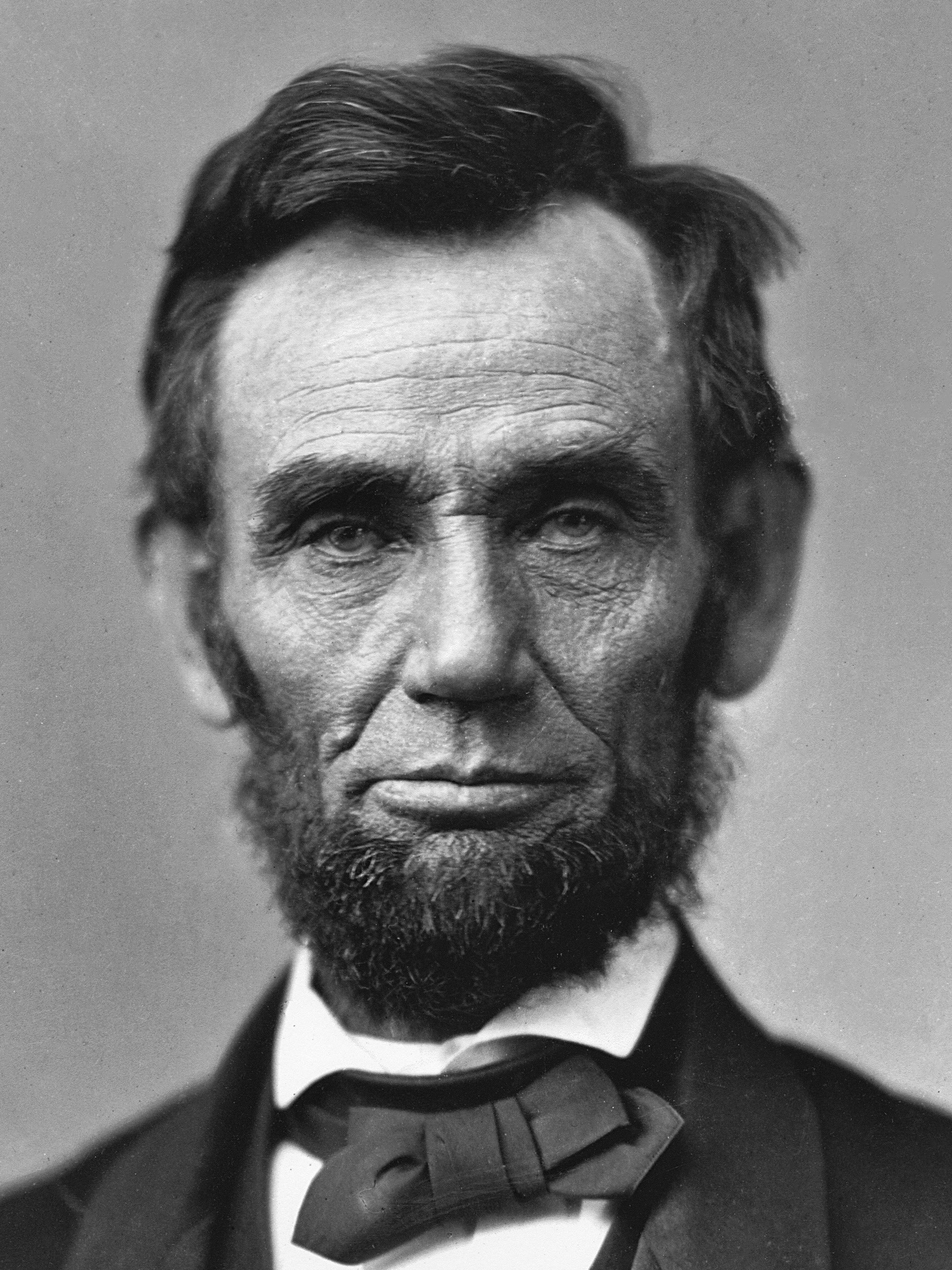
Abraham Lincoln was about 6 feet 4 inches tall, or approximately 1.93 metres. The figure is unusually well supported for a historical personality: Lincoln described himself as nearly that height in 1859, and the National Park Service records the familiar 6-foot-4 figure.
The word “nearly” is worth keeping. We have a strong approximate answer, not a reason to claim that his height was established to the nearest millimetre. Nor does the figure include the extra height of his famous stovepipe hat.
What did Lincoln say about his own height?
In the autobiographical material sent to Jesse W. Fell on 20 December 1859, Lincoln wrote that he was “six feet four inches, nearly.” The Library of Congress transcription preserves the wording.
This is direct testimony from Lincoln, rather than an estimate based on an artist’s portrait. It is still a self-report: the sentence does not explain a measuring instrument, time of day, or footwear. Those omissions do not make it useless, but they set sensible limits on precision.
The Lincoln Home National Historic Site gives his height as 6 feet 4 inches. Together, these sources support the conventional rounded answer without needing a more elaborate reconstruction.
What is that in centimetres?
Six feet four inches is 76 inches. Using the modern conversion of 2.54 centimetres per inch gives 193.04 centimetres. Because the historical description is approximate, about 193 centimetres—or 1.93 metres—is the appropriate published result.
The extra decimal places would merely express the conversion more finely. They would not remove the qualification in Lincoln’s original wording or turn his self-description into a modern clinical measurement.
Was he the tallest US president?
Yes. The National Institute of Standards and Technology’s presidential comparison identifies Lincoln as the tallest US president at 1.93 metres.
That comparison is more specific than saying he was taller than everybody around him. It ranks a defined group of officeholders; it does not claim to describe every nineteenth-century American or every politician he met.
Did his hat account for the height?
No. The standard figure concerns Lincoln’s body height. A tall hat can change the impression someone makes in a photograph or in person, but it should not be silently added to a conventional stature figure.
Trying to calculate his height from a portrait with a hat creates further problems: pose, perspective, footwear, cropping, and scale. Where a direct description exists, such an exercise would replace stronger evidence with weaker evidence.
Can the Lincoln Memorial statue be used as evidence?
The memorial’s sculpture is monumental, not a life-size body measurement. The National Park Service publishes the statue and building dimensions separately. Those describe the memorial, not Lincoln’s anatomy.
The same rule applies to statues of ancient rulers. A sculptor’s chosen scale cannot establish the subject’s height without independent evidence. Lincoln is especially useful as an example because his conventional height can be sourced without relying on a statue at all.
How does this compare with other historical height claims?
Different figures have different evidence. Napoleon’s height raises questions about measurement and units; Caesar’s height lacks an equivalent direct numerical self-description.
That is why our overview of famous historical figures’ heights should be read as a comparison of evidence as well as numbers. Lincoln’s approximately 1.93 metres is a strong answer, but it should not make every other entry appear equally certain.
Frequently asked questions
How tall was Abraham Lincoln?
Lincoln was about 6 feet 4 inches tall, approximately 1.93 metres. His own 1859 description says nearly that height.
Was Lincoln’s height measured with his hat?
The conventional figure describes his stature, not the combined height of his body and stovepipe hat.
Was Abraham Lincoln the tallest US president?
Yes. NIST’s presidential height comparison identifies Lincoln as the tallest at about 1.93 metres.